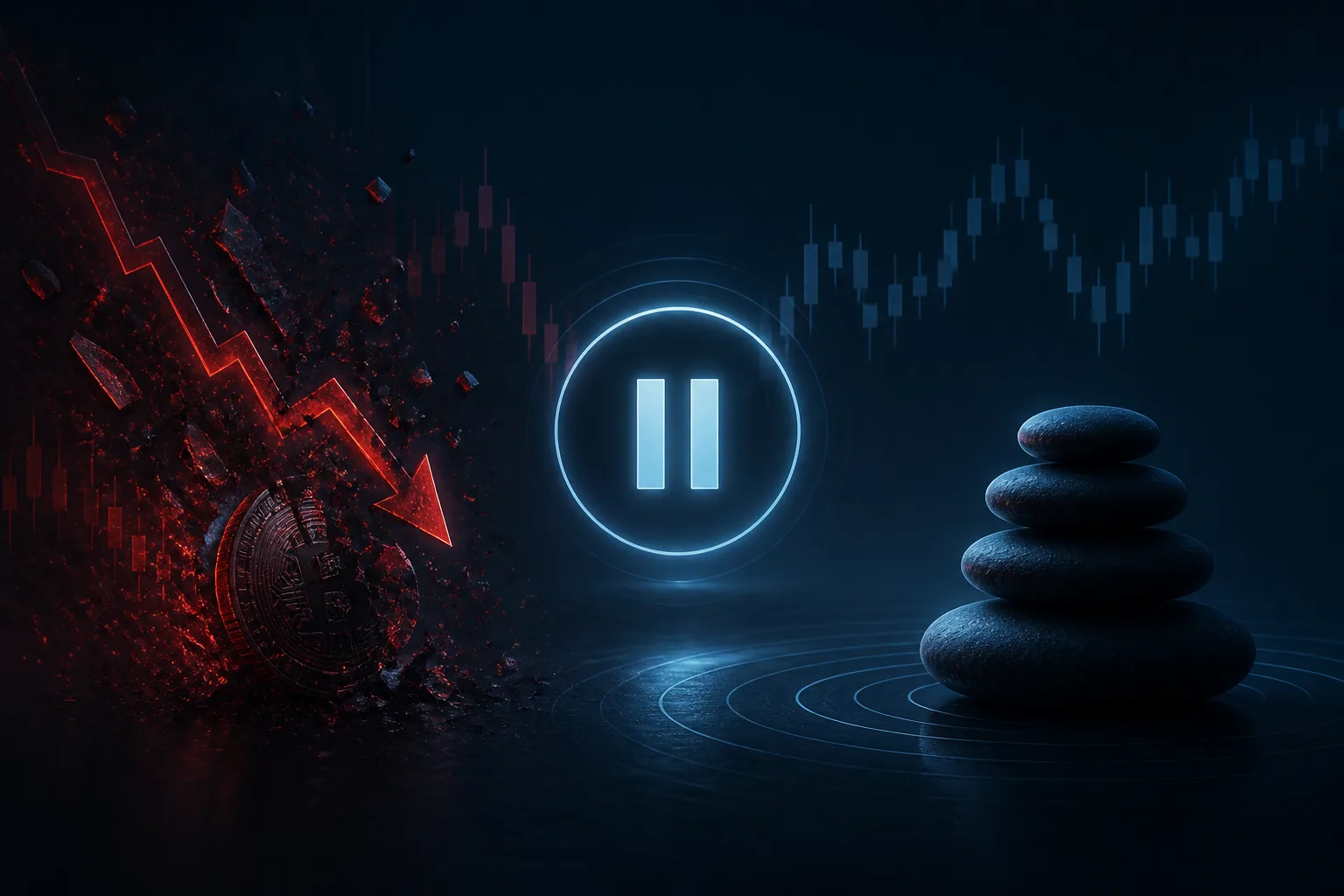
Funded trader psychology: how to avoid revenge trading after a loss
You lose a trade and want it back now. That urge is revenge trading — and on a spot challenge it can breach daily drawdown in one session.
What revenge trading actually is
Revenge trading means entries driven by recovering a recent loss, not by a valid system signal. In spot (no leverage) damage usually comes from size and frequency, not forced liquidations.
Typical signs: increasing size after a loss, skipping your setup, ignoring the stop, or chaining trades in minutes. On MOJA Funded, daily drawdown (e.g. 5% on 2-step or 4% on 1-step) does not forgive an impulsive session.
Warning signs before the next entry
Mechanical rules that work
Session loss limit
Decide in advance how many consecutive losers end your day (e.g. 2). Keep it even if you “feel fine”.
Mandatory pause after a loss
Wait a fixed time (15–30 minutes) before considering the next entry.
Fixed size per trade
Set risk (e.g. 0.5–1% of account) before the session — do not raise it mid-session.
Written entry checklist
If it fails any point, no trade. Treat it like drawdown rules: non-negotiable.
Log plan vs impulse
Mark each entry as “plan” or “impulse”. Patterns on paper beat memory.
How this maps to MOJA Funded rules
Daily and max drawdown (e.g. 10% static on 2-step) cap damage but do not stop you from clicking. Combine personal emotion rules with published challenge or funded limits.
The challenge is simulated; once funded you trade firm capital with a profit split. In both cases, revenge trading can close the account.
Related guides
Want clear rules from day one?
Explore MOJA Funded spot challenges designed around consistency and risk control.
View plans